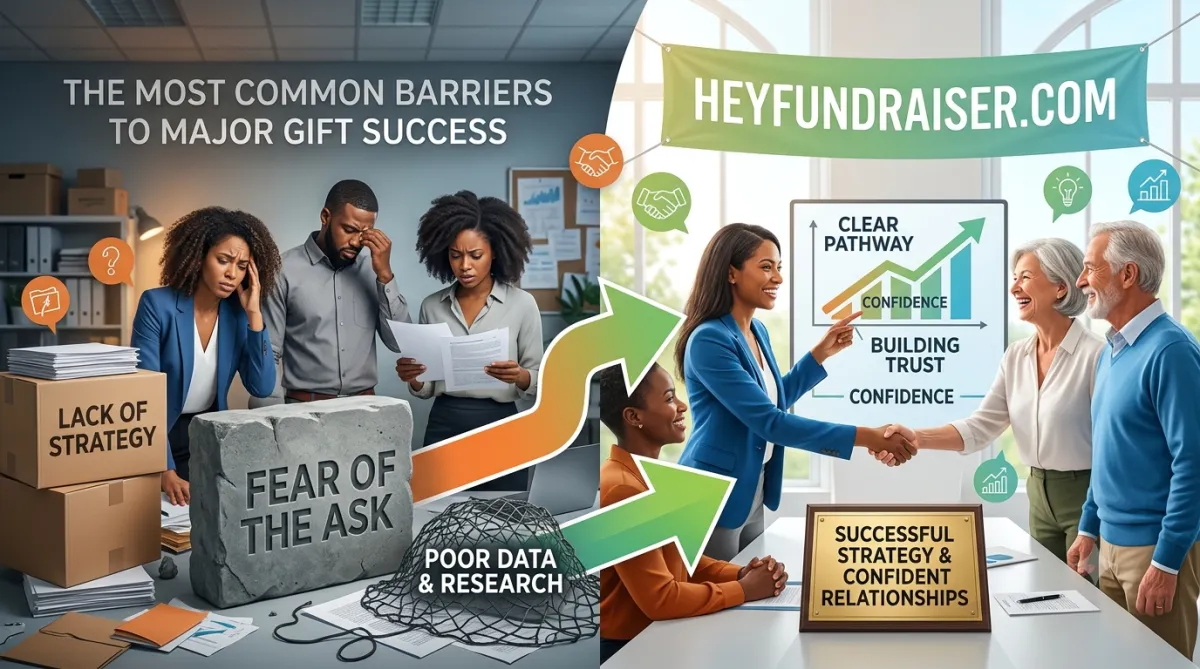
The Most Common Barriers to Major Gift Success
The Most Common Barriers to Major Gift Success and How to Overcome Them
Major gifts have the power to transform nonprofit organizations. A single meaningful contribution can fund new programs, expand services, strengthen operations, and create opportunities that would otherwise remain out of reach. Yet many organizations struggle to build and sustain successful major gift programs. While fundraising professionals understand the importance of cultivating significant donors, several common barriers often stand in the way of achieving consistent results.
Through my work in fundraising and conversations with nonprofit leaders, I have seen how these obstacles can limit growth and prevent organizations from reaching their full fundraising potential. The good news is that every barrier can be addressed with the right strategy, mindset, and commitment.
Failing to Prioritize Relationship Building
One of the most common mistakes in major gift fundraising is focusing too heavily on the transaction instead of the relationship. Donors who make significant contributions rarely do so because they received a single compelling appeal. They give because they feel connected to the mission, trust the organization, and believe their investment will make a meaningful impact.
When organizations spend more time asking than listening, they often miss opportunities to understand donor motivations. Strong major gift fundraising begins with genuine relationship building. This means creating meaningful conversations, learning about donor interests, and maintaining consistent engagement even when no immediate gift request is planned.
Building authentic relationships takes time, but it creates the foundation for long-term support and larger contributions.
Lack of a Clear Major Gift Strategy
Many nonprofits approach major gift fundraising without a defined plan. They identify potential donors and schedule meetings, but they lack a structured process for moving prospects through cultivation, solicitation, and stewardship.
Without a strategy, fundraising efforts become reactive rather than intentional. Opportunities can be missed, donor communication may become inconsistent, and staff members often struggle to prioritize their time effectively.
A successful major gift program requires clear goals, donor segmentation, cultivation plans, and measurable benchmarks. When every donor interaction serves a strategic purpose, organizations can create more meaningful engagement and improve fundraising outcomes.
Fear of Asking for Large Gifts
Even experienced fundraisers can feel uncomfortable making a major gift ask. Concerns about rejection, damaging relationships, or requesting too much often lead to hesitation.
Unfortunately, this fear can prevent organizations from securing transformational support. Donors who are deeply connected to a mission often appreciate being given the opportunity to make a significant impact. When a fundraiser avoids the conversation, they may actually limit the donor's ability to contribute in a meaningful way.
Confidence comes from preparation. Understanding a donor's interests, financial capacity, and philanthropic goals allows fundraisers to make informed and appropriate requests. Practicing solicitation conversations and focusing on the donor's opportunity to create change can also help reduce anxiety.
Insufficient Donor Research
Major gift fundraising depends on understanding the people behind the contributions. Without adequate research, organizations may approach donors with requests that do not align with their interests or giving capacity.
Research should go beyond financial indicators. It should include a donor's philanthropic history, community involvement, personal values, and previous engagement with the organization.
The more information available, the more personalized and effective fundraising conversations become. Donors want to feel understood, and thoughtful research demonstrates that their interests matter.
Weak Stewardship Practices
Securing a major gift is not the end of the fundraising process. In many ways, it is only the beginning. Donors who make significant contributions expect transparency, appreciation, and evidence of impact.
Unfortunately, some organizations focus heavily on acquisition while neglecting stewardship. When donors receive limited communication after making a gift, they may question whether their contribution made a difference.
Effective stewardship includes timely acknowledgments, regular updates, personal outreach, and opportunities to see the impact of their support firsthand. Strong stewardship strengthens trust and increases the likelihood of future giving.
Limited Leadership Involvement
Major gift fundraising is most successful when organizational leadership actively participates in donor engagement. Executive directors, board members, and senior leaders often play critical roles in building credibility and strengthening donor relationships.
When leadership remains disconnected from fundraising efforts, opportunities for deeper engagement can be lost. Donors frequently want access to decision-makers and organizational visionaries who can speak directly about long-term goals and impact.
Creating a culture where leadership embraces fundraising responsibilities can significantly improve donor confidence and increase major gift success.
Poor Donor Pipeline Management
Many nonprofits focus on a small group of current donors while neglecting future prospects. As a result, their major gift pipeline becomes stagnant over time.
A healthy fundraising program continuously identifies and cultivates new potential supporters. This ensures that future opportunities remain strong and reduces dependence on a limited number of donors.
Pipeline development should be an ongoing process that includes prospect identification, qualification, relationship building, and strategic engagement. Consistent attention to the pipeline helps create long-term fundraising sustainability.
Inconsistent Follow Up
Donor relationships require regular communication. Yet many organizations allow long periods to pass between interactions. These gaps can weaken engagement and make future solicitations more challenging.
Consistent follow up demonstrates commitment and reinforces the relationship. It keeps donors informed, involved, and connected to the mission throughout the year.
Successful fundraisers establish communication plans that include meetings, updates, impact reports, event invitations, and personal check-ins. These touchpoints help maintain momentum and strengthen donor loyalty.
Focusing on Money Instead of Impact
One of the most significant barriers to major gift success is framing fundraising conversations around financial needs rather than mission impact.
Donors are rarely inspired by budget deficits or operational challenges alone. They want to understand how their support will create measurable change. They want to see lives improved, communities strengthened, and problems solved.
When fundraisers focus on outcomes rather than dollars, conversations become more compelling. Donors begin to see themselves as partners in creating meaningful impact rather than simply funding organizational expenses.
Building a Stronger Path to Major Gift Success
Major gift fundraising is both an art and a discipline. Success requires intentional relationship building, strategic planning, thoughtful stewardship, and a willingness to engage donors in meaningful conversations about impact.
The barriers that prevent organizations from achieving major gift success are common, but they are not permanent. By recognizing these challenges and implementing practical solutions, nonprofits can create stronger donor relationships and unlock new levels of philanthropic support.
At Hey Fundraiser, I frequently discuss these fundraising challenges and the strategies that help organizations overcome them. Through conversations with experienced professionals, nonprofit leaders, and development experts, I continue to explore the practices that drive sustainable fundraising growth.
The journey toward major gift success is not about finding a perfect formula. It is about building trust, creating meaningful donor experiences, and maintaining a long-term commitment to relationship-centered fundraising. Those organizations that embrace this approach position themselves for stronger donor engagement, greater impact, and lasting success.
Whether you are just beginning to develop a major gift program or looking to strengthen an existing one, the lessons shared through Hey Fundraiser can help provide valuable insights for navigating the challenges and opportunities ahead.
