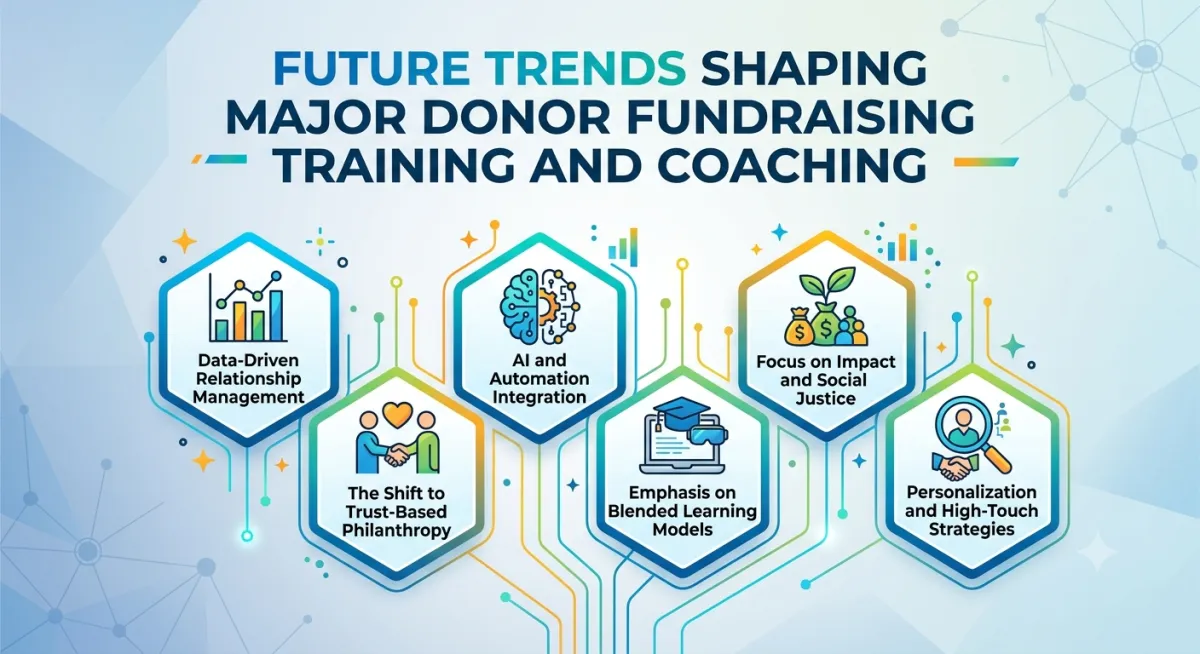
Future Trends Shaping Major Donor Fundraising Training and Coaching
Future Trends Shaping Major Donor Fundraising Training and Coaching
Major donor fundraising has entered a new era where relationships, strategy, and continuous learning have become more valuable than ever before. As donor expectations evolve and charitable organizations face increasing competition for philanthropic support, fundraising professionals must develop stronger communication skills, deeper emotional intelligence, and more refined cultivation strategies. I believe that successful fundraising is no longer about relying on traditional techniques alone. It requires a willingness to embrace innovation while staying committed to authentic human connection. Through Hey Fundraiser, I have seen how the right coaching and education can help fundraisers confidently adapt to changing donor behaviors while building meaningful, long-term partnerships that inspire transformational giving.
Donor Expectations Continue to Evolve
Today's major donors expect far more than occasional updates and annual appeals because they want genuine engagement with the organizations they choose to support. They seek transparency, measurable outcomes, and opportunities to contribute beyond financial gifts by sharing expertise, networks, and leadership. As these expectations continue to grow, fundraising professionals must refine their relationship-building skills through ongoing education and coaching. I see training programs becoming increasingly focused on empathy, active listening, and personalized stewardship rather than simply teaching solicitation techniques. Future fundraising success will depend on understanding each donor's unique motivations and aligning charitable opportunities with their personal values and long-term philanthropic goals.
Personalized Coaching Will Replace Generic Training Models
One-size-fits-all fundraising education is gradually becoming less effective because every fundraiser faces different challenges, serves different communities, and works within unique organizational structures. Personalized coaching allows individuals to receive targeted guidance that addresses their specific strengths, weaknesses, and professional goals. I expect future fundraising development programs to include customized learning paths, individual performance assessments, and ongoing mentorship instead of isolated workshops. This approach helps fundraisers apply lessons directly to their real donor portfolios while receiving practical feedback that accelerates growth. The combination of individualized coaching and continuous accountability creates stronger fundraising professionals who are better prepared for complex donor conversations.
Artificial Intelligence Will Support Better Donor Engagement
Artificial intelligence is beginning to reshape how nonprofit organizations analyze donor information, identify giving patterns, and prioritize relationship opportunities. Rather than replacing human interaction, these technologies will provide valuable insights that help fundraisers prepare for more meaningful conversations with prospective supporters. I believe future coaching programs will include practical instruction on interpreting donor analytics, using predictive insights responsibly, and integrating technology into everyday fundraising activities. Understanding data will become an essential professional skill while maintaining authentic personal relationships remains the highest priority. Fundraisers who successfully balance technological tools with genuine empathy will be better equipped to cultivate lasting donor partnerships.
Communication Skills Will Become Even More Important
Although technology continues to advance, personal communication remains the foundation of major donor fundraising. Future training will place greater emphasis on storytelling, active listening, thoughtful questioning, and emotional intelligence because these skills create stronger donor relationships. I often encourage fundraisers to become confident conversationalists who focus on understanding donor aspirations before discussing financial support. Coaching will increasingly emphasize preparing for difficult conversations, handling objections gracefully, and strengthening long-term trust through consistent engagement. As donor relationships become more sophisticated, communication excellence will distinguish highly successful fundraising professionals from those who rely solely on transactional approaches.
Leadership Development Will Be Integrated Into Fundraising Education
Fundraising professionals are increasingly expected to lead teams, influence organizational culture, and collaborate across departments rather than focusing only on donor cultivation. Because of this shift, leadership development will become an essential component of fundraising coaching and professional education. I believe future programs will dedicate more attention to decision making, strategic planning, conflict resolution, and organizational collaboration alongside traditional fundraising topics. Strong leaders inspire confidence among colleagues, volunteers, and donors while creating environments where philanthropy can flourish. Developing leadership capabilities allows fundraisers to expand their impact beyond individual donor relationships and contribute to broader organizational success.
Ethical Fundraising Practices Will Receive Greater Attention
Public trust remains one of the most valuable assets any nonprofit organization can possess, making ethical fundraising practices increasingly important. Donors expect transparency regarding financial stewardship, organizational governance, and the measurable impact of their contributions. Future coaching programs will devote greater attention to ethical decision making, responsible donor engagement, and maintaining professional integrity throughout every stage of the fundraising process. I believe ethical education should be embedded into every aspect of fundraising training because trust cannot be built through technical expertise alone. Organizations that consistently demonstrate honesty and accountability will continue to attract stronger donor relationships and greater long-term support.
Continuous Learning Will Become a Professional Standard
The fundraising profession continues to evolve rapidly, making lifelong learning an essential part of sustained success. Professionals who regularly update their knowledge remain better prepared to respond to changing donor expectations, emerging technologies, and shifting philanthropic trends. I expect future fundraising coaching to move away from isolated certification events and toward ongoing educational communities that encourage collaboration, discussion, and practical application. Learning will increasingly occur through mentoring relationships, virtual coaching sessions, peer networking, and specialized educational resources that provide continuous development opportunities. At Hey Fundraiser, I believe maintaining curiosity and investing in continuous improvement are essential qualities for every fundraising professional seeking lasting success.
Podcast Learning Will Expand Professional Development Opportunities
Podcasts have become one of the most convenient ways for fundraising professionals to continue learning while balancing demanding schedules. Whether commuting, traveling, or preparing for donor meetings, fundraisers can gain valuable insights from experienced practitioners without interrupting their daily responsibilities. I expect educational podcasts to become increasingly interactive by incorporating listener questions, expert interviews, practical case studies, and discussions about emerging fundraising challenges. This format allows professionals to access current knowledge quickly while remaining connected to evolving best practices across the nonprofit sector. Audio learning complements traditional coaching by providing flexible opportunities for consistent professional development throughout the year.
Emotional Intelligence Will Shape Stronger Donor Relationships
As fundraising becomes increasingly relationship driven, emotional intelligence will play an even greater role in successful donor engagement. Understanding emotions, recognizing unspoken concerns, and responding thoughtfully help create authentic conversations that strengthen trust over time. Future coaching programs will focus more intentionally on developing self-awareness, empathy, adaptability, and resilience because these qualities influence every interaction with prospective supporters. I believe emotional intelligence cannot be separated from fundraising excellence because major gifts are built upon genuine human relationships rather than persuasive techniques alone. Professionals who invest in developing these interpersonal skills will be better positioned to create meaningful philanthropic partnerships.
Collaborative Learning Communities Will Continue to Grow
Future fundraising education will increasingly emphasize collaboration rather than isolated professional development. Fundraisers benefit enormously from sharing experiences, discussing challenges, and learning from colleagues who have navigated similar situations. Coaching programs will encourage greater participation in peer learning groups, mentoring circles, and professional communities where practical knowledge can be exchanged openly. These collaborative environments help fundraisers discover innovative ideas while reducing the sense of isolation that many professionals experience in demanding roles. Through Hey Fundraiser, I continue to see how meaningful conversations among fundraising professionals often produce valuable insights that cannot be found in textbooks alone.
The future of major donor fundraising training and coaching will be shaped by continuous learning, personalized development, ethical leadership, technological advancement, and stronger human relationships. While new tools and strategies will continue to emerge, the core principles of trust, authenticity, and meaningful donor engagement will remain unchanged. I believe fundraising professionals who embrace these evolving trends while remaining committed to genuine relationship building will achieve greater long-term success for both themselves and the organizations they serve. By investing in ongoing education, thoughtful coaching, and practical experience, every fundraiser can confidently prepare for the future while building lasting partnerships that create meaningful and sustainable philanthropic impact.
