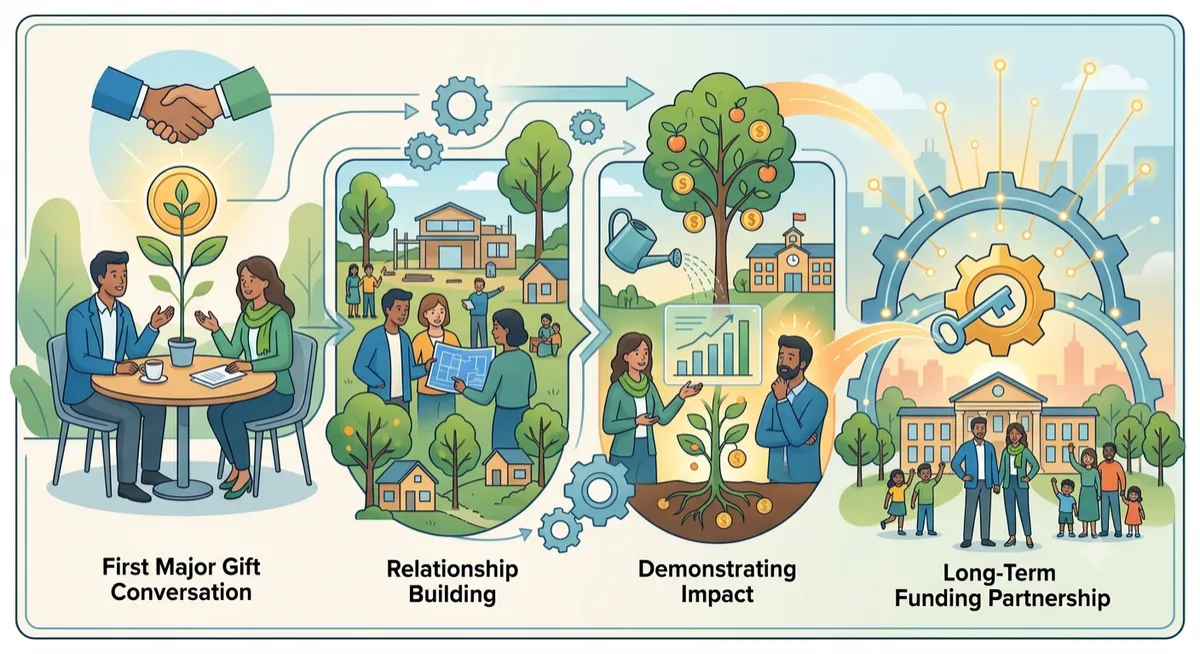
How to Turn a First Major Gift Conversation Into a Long-Term Funding Partnership
Understanding the Real Value of a First Major Gift Conversation
A first major gift conversation can become the beginning of a meaningful, long-term relationship between a nonprofit organization and a committed donor. While the immediate goal may be to secure a significant contribution, the broader opportunity is to establish trust, communicate shared values, and create a foundation for continued support. I believe successful fundraising is not simply about asking for money at the right moment, but about understanding what motivates a donor to invest in a mission. When a donor feels heard, respected, and connected to the cause, the conversation can develop into a partnership that delivers lasting benefits for everyone involved. This approach requires preparation, thoughtful communication, and a genuine interest in building relationships beyond a single transaction. Through my work at Hey Fundraiser, I encourage fundraisers to approach major gift conversations as opportunities to create meaningful connections that can support an organization's mission for years to come.
Researching the Donor Before the First Meeting
Preparation is one of the most important factors in turning an initial major gift conversation into a lasting funding relationship. Before meeting a prospective donor, I recommend researching their philanthropic interests, previous charitable contributions, professional background, and publicly available information about the causes they support. This research helps fundraisers understand whether the organization's mission aligns with the donor's personal values and charitable priorities. It also provides useful context for asking relevant questions instead of relying on a generic fundraising presentation. However, research should guide the conversation rather than lead to assumptions about a donor's financial capacity, motivations, or willingness to contribute. When fundraisers enter a meeting with informed questions and a genuine desire to learn, they establish a stronger foundation for trust and mutual understanding.
Starting With Curiosity Instead of an Immediate Ask
One of the most common mistakes in major gift fundraising is moving too quickly toward a financial request before understanding the donor's interests. Although the conversation may eventually involve a substantial gift, the initial meeting should create space for the prospective donor to explain what matters to them and why they support particular causes. I encourage fundraisers to ask open-ended questions about the experiences, values, and outcomes that influence a donor's philanthropic decisions. Questions about the issues they care most about, the changes they hope to create, and their previous giving experiences can reveal valuable insights. Listening carefully to these responses helps fundraisers identify meaningful connections between the donor's priorities and the organization's work. When the conversation begins with curiosity rather than pressure, the donor is more likely to feel that the relationship is being developed around shared purpose instead of an immediate financial objective.
Connecting the Organization's Mission With the Donor's Values
Once a fundraiser understands the donor's interests, the next step is to demonstrate how the organization's mission connects with those priorities. This requires more than describing programs, sharing organizational history, or presenting a list of achievements. I recommend explaining the specific challenges the organization addresses, the people who benefit from its work, and the measurable changes that additional funding can make possible. For example, a donor interested in educational opportunity may respond more strongly to a discussion about improving student outcomes than to a general request to support a nonprofit's annual budget. The goal is to help the donor understand how their philanthropic interests can translate into meaningful outcomes through the organization's programs. When this connection is authentic and supported by credible information, the conversation becomes more relevant and creates a stronger basis for a future funding partnership.
Communicating Impact Without Overwhelming the Donor
Major donors often want to understand how their contributions will make a difference, but providing too much information can distract from the purpose of the conversation. Fundraisers should focus on a few compelling examples that demonstrate the organization's effectiveness, the importance of its mission, and the opportunities that additional funding could unlock. I find that a combination of personal stories, relevant data, and clear explanations of program outcomes can make a nonprofit's impact easier to understand. Stories help donors connect emotionally with the people or communities being served, while credible evidence demonstrates that the organization approaches its work responsibly. It is equally important to be transparent about challenges, uncertainties, and areas where further investment is needed. By presenting impact honestly and clearly, fundraisers can establish credibility and help prospective donors make informed decisions about their potential involvement.
Understanding What a Meaningful Partnership Looks Like to the Donor
A long-term funding partnership should reflect the donor's expectations as well as the nonprofit's strategic priorities. Some donors prefer to support a specific program, while others may be interested in organizational growth, innovation, capacity building, or unrestricted funding that allows leaders to respond to changing needs. I recommend exploring these preferences before presenting a detailed funding proposal. Fundraisers should also understand how donors prefer to receive updates, how frequently they want to communicate, and what level of involvement feels appropriate to them. These conversations can reveal whether a donor wants a relatively hands-off relationship or would appreciate opportunities to meet program leaders, visit project sites, or learn about strategic decisions. By understanding the donor's preferred approach to giving, fundraisers can develop a partnership that feels personally meaningful while remaining aligned with the organization's mission and operational needs.
Making the First Financial Ask at the Right Time
A successful first conversation does not always need to end with a direct request for a major gift. In many cases, the most productive outcome is a clearer understanding of the donor's interests and agreement to continue the discussion. However, when the donor demonstrates genuine interest, asks detailed questions about funding opportunities, or expresses a desire to make a difference, it may be appropriate to introduce a specific giving opportunity. I encourage fundraisers to connect any financial request to the priorities already discussed rather than presenting an amount without context. The proposed contribution should reflect the organization's actual funding needs, the opportunity available to the donor, and any relevant information about the donor's stated interests. A confident but respectful approach allows the fundraiser to communicate the opportunity clearly while giving the donor sufficient space to consider the request without feeling pressured.
Following Up With a Personal and Purposeful Message
The follow-up after a first major gift conversation can significantly influence whether the relationship progresses. I recommend sending a personalized message within a reasonable period after the meeting, thanking the donor for their time and referencing specific points they shared during the discussion. This demonstrates that the fundraiser was listening and values the donor's perspective beyond their potential financial contribution. The message should also confirm any agreed next steps, such as sharing program information, arranging another meeting, or introducing the donor to a member of the leadership team. If additional information was requested, it should be accurate, relevant, and delivered within the timeframe promised. A thoughtful follow-up keeps the conversation moving forward and establishes a professional standard that can shape the donor's expectations of the organization throughout the relationship.
Creating a Relationship-Based Donor Engagement Plan
Once the initial conversation has taken place, fundraisers should develop a donor engagement plan that reflects what they have learned. This plan should identify the donor's interests, the opportunities that may align with those interests, the next appropriate interaction, and the information needed to support future discussions. I recommend recording relevant details in the organization's donor management system so that future communications remain consistent and personalized. The engagement plan might include an invitation to meet a program director, an update about a relevant initiative, or a conversation about the organization's long-term strategy. Each interaction should have a clear purpose and provide value to the donor rather than simply creating another opportunity to request money. When engagement is thoughtful and consistent, the donor begins to experience the organization as a trusted partner rather than an institution that contacts them only when funding is required.
Building Trust Through Transparency and Accountability
Trust is the foundation of any successful long-term funding partnership, particularly when donors are considering substantial philanthropic commitments. Fundraisers can strengthen that trust by explaining how contributions are managed, how funding decisions are made, and how the organization evaluates its results. I believe accountability should be an ongoing part of donor communication rather than something that begins only after a gift has been received. When a donor supports a program, the organization should provide updates that accurately reflect progress, challenges, and the outcomes achieved with the available resources. If a project encounters delays or its circumstances change, communicating those developments honestly is essential. Consistent transparency reassures donors that the organization takes its responsibilities seriously and respects the confidence they place in its leadership and mission.
Showing Appreciation Beyond the Initial Gift
Donor appreciation should be personal, timely, and appropriate to the donor's preferences. While a formal acknowledgment and tax receipt may be necessary, meaningful stewardship extends beyond administrative requirements. I encourage fundraisers to recognize the significance of a donor's contribution by explaining how it supports the organization's work and why their involvement matters. Some donors may appreciate a personal conversation with the executive director, while others may prefer a concise written update or an invitation to see a program in action. Fundraisers should also respect donors who prefer to remain anonymous or maintain distance from day-to-day activities. Thoughtful appreciation communicates that the organization values the donor's generosity and the relationship itself, creating a positive experience that can encourage continued engagement.
Demonstrating Progress Between Funding Requests
A long-term funding partnership grows when donors can see meaningful progress between major gift requests. Instead of waiting until the next fundraising campaign to reconnect, I recommend sharing relevant developments that demonstrate how the organization's mission is advancing. These updates may include progress toward program goals, improvements in service delivery, important milestones, or lessons learned through implementation. The information should be tailored to the donor's interests and presented at a frequency that respects their communication preferences. Fundraisers should avoid overwhelming donors with repetitive messages or reports that contain little meaningful information. By maintaining a steady flow of relevant communication, organizations can help donors understand the ongoing value of their involvement and strengthen their confidence in the partnership.
Turning a One-Time Gift Into a Multi-Year Commitment
A one-time major gift can provide an opportunity to discuss a broader funding commitment when the relationship has developed sufficiently. Multi-year gifts can help nonprofits plan programs more effectively, invest in organizational capacity, and reduce uncertainty around future funding. However, I recommend introducing this possibility through a conversation about shared goals and long-term impact rather than treating it as an automatic next step after an initial contribution. Fundraisers can explain how predictable funding supports strategic planning and enables the organization to pursue outcomes that may take several years to achieve. They should also explore whether the donor prefers annual commitments, a pledge paid over multiple years, or another arrangement that fits the donor's philanthropic intentions. When the timing is appropriate and the proposal reflects genuine alignment, a multi-year commitment can transform an individual gift into a more stable and strategic funding relationship.
Inviting Donors Into Strategic Conversations
Some major donors want to understand not only what the organization is doing today but also where it intends to go in the future. Inviting interested donors into appropriate strategic conversations can deepen their connection to the mission and help them understand the broader significance of their support. I recommend sharing the organization's long-term priorities, emerging opportunities, and the challenges that may affect its ability to achieve its goals. Depending on the donor's preferences and the organization's policies, this could involve a discussion with senior leadership, an invitation to a strategic briefing, or an opportunity to learn more about a developing initiative. These conversations should provide insight without implying that financial contributions automatically grant influence over organizational decisions. Clear boundaries help maintain the nonprofit's independence while allowing donors to develop a deeper understanding of its vision and strategic direction.
Managing Expectations and Maintaining Professional Boundaries
Strong donor relationships require clear expectations from the beginning. Fundraisers should explain what the organization can realistically deliver, how restricted gifts will be managed, and what forms of communication or involvement are available. I recommend avoiding promises that depend on uncertain outcomes or resources the organization cannot guarantee. Donors should also understand that programs may evolve as community needs change, even when the organization's broader mission remains consistent. When a donor requests an arrangement that conflicts with the nonprofit's values, legal obligations, or operational priorities, fundraisers must address the concern professionally and transparently. Maintaining appropriate boundaries protects both parties and ensures that the partnership remains sustainable, ethical, and focused on the people the organization exists to serve.
Measuring the Health of a Long-Term Funding Partnership
Fundraising teams need more than gift totals to understand whether a major donor relationship is developing successfully. I recommend evaluating relationship health through a combination of engagement, communication, donor satisfaction, giving patterns, and progress toward shared objectives. Relevant indicators may include the number of meaningful conversations, participation in agreed engagement opportunities, responsiveness to updates, renewal rates, and the progression from an initial gift to subsequent commitments. These measures should be interpreted in context because donors differ in their communication preferences, decision-making timelines, and approaches to philanthropy. A donor who communicates infrequently may still be deeply committed, while frequent engagement does not necessarily indicate an intention to increase giving. By combining quantitative indicators with thoughtful relationship assessments, fundraisers can identify opportunities to strengthen engagement without reducing the partnership to a series of financial transactions.
Learning From Conversations That Do Not Lead to an Immediate Gift
Not every first major gift conversation will produce a contribution, and that outcome does not necessarily mean the conversation was unsuccessful. A donor may need additional time to evaluate the opportunity, consult with family members or advisers, review financial commitments, or understand the organization's work more thoroughly. I encourage fundraisers to respect these decision-making processes rather than interpreting hesitation as rejection. When appropriate, they can ask what additional information would help the donor evaluate the opportunity and agree on a suitable time to reconnect. Even when the donor decides not to give, the conversation may reveal useful insights about the organization's positioning, funding proposal, or communication approach. Maintaining a respectful relationship after a declined request preserves goodwill and leaves room for future engagement if the donor's priorities or circumstances change.
Strengthening the Fundraising Team's Relationship-Building Skills
Turning first conversations into long-term funding partnerships is a skill that improves through preparation, reflection, and practice. Fundraising professionals need to become comfortable discussing complex organizational needs, asking thoughtful questions, responding to concerns, and communicating the value of philanthropic investment. I encourage teams to review important donor conversations, identify what worked well, and consider where listening or follow-up could have been stronger. Role-playing exercises can help fundraisers prepare for difficult questions about impact, financial sustainability, and the appropriate use of funds. Coaching can also help individuals recognize habits that may weaken donor relationships, such as speaking too much, rushing toward an ask, or relying on generic presentations. At Hey Fundraiser, I emphasize the importance of developing practical fundraising skills that support confident communication, stronger donor relationships, and more sustainable fundraising outcomes.
Creating a Partnership That Continues to Grow
A long-term funding partnership should evolve as the donor's interests develop and the organization's needs change. Regular conversations can help both parties identify new opportunities, reassess priorities, and determine whether the current funding arrangement continues to deliver meaningful value. I recommend approaching these discussions with openness and a willingness to adapt, while remaining clear about the organization's mission and responsibilities. Some partnerships may grow through larger annual contributions, while others may expand through multi-year commitments, introductions to aligned supporters, or support for new strategic initiatives. The most effective relationships are not necessarily those that increase in financial value every year, but those that remain grounded in mutual trust, shared purpose, and a clear understanding of impact. When fundraisers consistently invest in the relationship, the original conversation can become the starting point for a partnership that supports meaningful change over many years.
Conclusion: Make the First Conversation the Beginning, Not the Goal
Turning a first major gift conversation into a long-term funding partnership requires a deliberate shift from transactional fundraising to relationship-centered engagement. I believe the strongest partnerships emerge when fundraisers understand donor motivations, communicate organizational impact clearly, follow through on commitments, and maintain consistent accountability. Every interaction should strengthen the donor's understanding of the mission while giving the organization an opportunity to demonstrate its integrity and effectiveness. This does not mean avoiding financial conversations, but ensuring that requests arise naturally from a genuine understanding of shared priorities and meaningful funding opportunities. With thoughtful preparation, personalized stewardship, and a commitment to transparency, fundraisers can create relationships that extend well beyond an initial contribution. My goal through Hey Fundraiser is to help fundraising professionals build the confidence, knowledge, and relationship-building habits needed to turn important donor conversations into lasting partnerships that advance their missions and create sustainable funding for the future.
