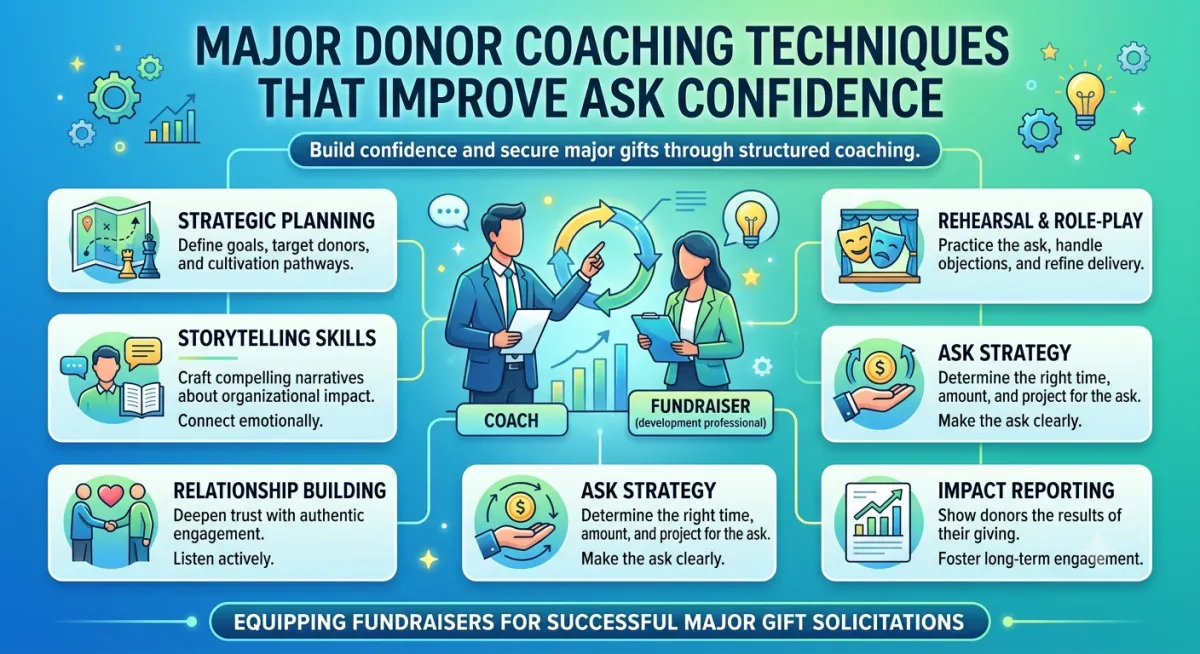
Major Donor Coaching Techniques That Improve Ask Confidence
Major Donor Coaching Techniques That Improve Ask Confidence
Understanding Why Ask Confidence Matters in Major Gift Fundraising
Every fundraiser has experienced moments where confidence feels uncertain before an important donor meeting. Even professionals with years of experience can question whether they are saying the right thing, asking for the appropriate amount, or responding effectively to unexpected questions. I have learned that successful fundraising rarely depends on having a perfect script. Instead, it comes from preparation, clarity, and a genuine commitment to building meaningful relationships. At Hey Fundraiser, I focus on helping fundraisers replace uncertainty with practical skills that strengthen every donor conversation. When confidence grows through consistent coaching, every interaction becomes more authentic and productive.
Shifting the Focus from the Ask to the Relationship
One of the most effective coaching techniques begins by changing how I think about fundraising conversations. Rather than viewing the meeting as a transaction, I encourage seeing it as an opportunity to deepen trust with someone who already cares about the mission. This mindset removes unnecessary pressure because the conversation becomes centered on shared values instead of financial targets. Donors appreciate authentic dialogue far more than rehearsed sales language. When relationship building becomes the primary objective, the financial commitment often follows naturally because the connection feels genuine and meaningful. Confidence grows when I remember that the donor is a partner rather than an obstacle.
Building Confidence Through Thorough Donor Research
Preparation is one of the strongest confidence builders available to any fundraiser. Before every significant donor meeting, I spend time understanding the individual's philanthropic history, personal interests, community involvement, and previous engagement with the organization. This research creates meaningful talking points that make conversations more relevant and personal. Instead of wondering what to discuss, I enter the meeting with valuable insights that demonstrate respect for the donor's interests. Better preparation also allows me to anticipate questions and connect organizational priorities with the causes the donor already values. The result is a conversation that feels informed instead of improvised.
Practicing Conversations Instead of Memorizing Scripts
Many people assume confidence comes from memorizing every word before an important meeting. In reality, rehearsing complete scripts often creates unnecessary pressure because conversations rarely unfold exactly as expected. I coach fundraisers to practice themes, transitions, and storytelling rather than exact wording. This flexible approach makes it easier to adapt naturally as the discussion develops. Practicing different donor responses also prepares me for a variety of scenarios without creating panic when the conversation changes direction. Genuine confidence comes from understanding the purpose behind each discussion instead of trying to remember every sentence.
Strengthening Active Listening Skills
One of the most overlooked coaching techniques involves listening more carefully than speaking. Donors frequently reveal valuable information about their motivations, concerns, and aspirations when they are given the opportunity to talk openly. I practice asking thoughtful questions and allowing enough silence for meaningful responses instead of rushing to fill every pause. Careful listening also demonstrates respect and helps build stronger relationships over time. As I become more attentive, I gain greater clarity about what truly inspires each donor. This knowledge makes future conversations far more effective because every recommendation is based on genuine understanding rather than assumptions.
Using Storytelling to Create Emotional Connection
Facts and statistics certainly matter, but stories are often what inspire meaningful generosity. I encourage fundraisers to collect authentic stories that demonstrate the real impact of every contribution. Rather than presenting only organizational achievements, I focus on individuals whose lives have been changed through donor support. These stories create emotional engagement while illustrating exactly how additional funding can make an even greater difference. Practicing these narratives before donor meetings helps me deliver them with sincerity instead of sounding rehearsed. Confidence naturally improves because meaningful stories create authentic conversations that donors remember long after the meeting ends.
Learning to Handle Difficult Questions Calmly
Even experienced fundraisers encounter challenging questions during major donor conversations. Questions about financial accountability, organizational priorities, leadership decisions, or project timelines can feel intimidating without preparation. I coach fundraisers to expect these discussions instead of fearing them because preparation removes much of the uncertainty. Practicing honest, transparent responses builds credibility while reducing anxiety before meetings. It is also important to recognize that saying, "I will find that information and follow up," is often a stronger response than guessing. Confidence grows when I know I can respond thoughtfully under pressure instead of feeling forced to have every answer immediately.
Becoming Comfortable Discussing Gift Amounts
One of the greatest obstacles to ask confidence is discomfort around discussing financial commitments. Many fundraisers hesitate because they worry about appearing too aggressive or making donors uncomfortable. Coaching helps remove these fears by reframing the conversation as an invitation rather than a demand. I practice presenting gift opportunities with confidence while emphasizing the impact each contribution will create. Donors expect fundraising professionals to discuss financial support, especially when they have already demonstrated commitment to the mission. The conversation becomes much easier when I focus on opportunity instead of obligation.
Preparing for Objections with Curiosity
Donor hesitation should never be viewed as rejection. Instead, I encourage approaching objections with curiosity and a genuine desire to understand the donor's perspective. Questions about timing, project priorities, or financial circumstances often reveal opportunities for deeper discussion rather than ending the conversation. By practicing various objection scenarios during coaching sessions, I become more comfortable responding with empathy instead of defensiveness. Every thoughtful response strengthens trust because donors appreciate being heard rather than pressured. This approach transforms potentially stressful moments into productive conversations that maintain long term relationships.
Reflecting After Every Donor Conversation
Continuous improvement is one of the most valuable confidence building habits. After every significant donor meeting, I spend time evaluating what went well, what surprised me, and what could be improved before the next conversation. This reflection process transforms every experience into practical learning rather than allowing mistakes to become discouraging memories. Over time, small adjustments accumulate into noticeable improvements in communication and relationship management. At Hey Fundraiser, I believe that confidence develops through consistent reflection combined with practical coaching rather than relying on natural talent alone. Every conversation becomes another opportunity to strengthen future fundraising success.
Developing Long Term Confidence Through Coaching
True ask confidence is not created during a single training session or after reading one fundraising book. It develops gradually through repeated practice, honest feedback, thoughtful preparation, and meaningful experience with real donor conversations. Every coaching session provides another opportunity to refine communication skills, improve relationship building, and strengthen decision making during important meetings. As confidence grows, fundraising conversations become more enjoyable because they are based on authenticity instead of fear. Through the guidance and resources available at Hey Fundraiser, I continue helping fundraisers develop lasting confidence that supports stronger donor relationships, larger gifts, and greater mission impact for years to come.
