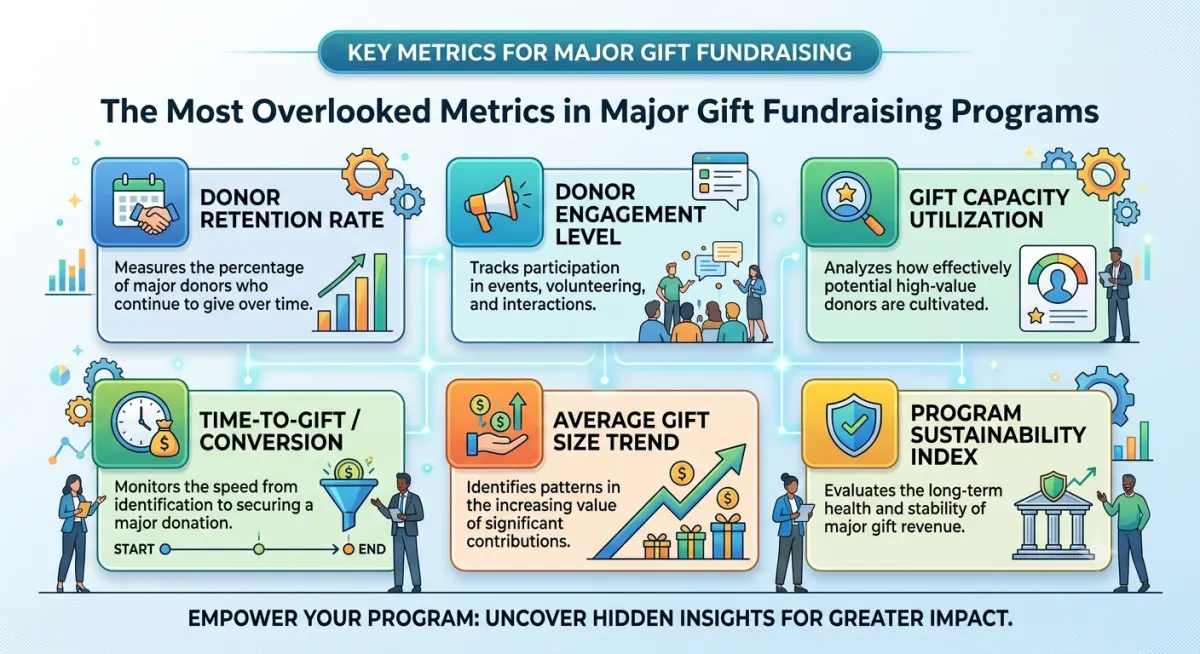
The Most Overlooked Metrics in Major Gift Fundraising Programs
The Most Overlooked Metrics in Major Gift Fundraising Programs
Major gift fundraising is often associated with ambitious revenue goals, high value donor relationships, and successful campaign outcomes. While these results certainly matter, they rarely tell the full story behind a thriving fundraising program. Throughout my experience working with nonprofit professionals, I have found that organizations frequently focus on end results while overlooking the performance indicators that actually drive sustainable growth. Revenue is important, but it is only one piece of a much larger picture. Understanding the right metrics helps identify strengths, expose hidden weaknesses, and create a fundraising strategy that delivers consistent long term success. At Hey Fundraiser, I encourage fundraisers to look beyond traditional reports and build systems that measure the activities responsible for meaningful donor engagement.
Why Traditional Revenue Reports Tell Only Part of the Story
Many fundraising teams judge success almost entirely by the total amount raised during a campaign or fiscal year. While this provides an overview of financial performance, it offers little insight into why those results occurred or whether they can be repeated in the future. A single large gift may significantly increase annual revenue, yet underlying donor engagement could actually be declining. Without tracking deeper operational metrics, organizations often celebrate short term wins while unknowingly creating long term fundraising challenges. Looking beyond revenue allows me to evaluate the health of the entire donor pipeline rather than simply measuring its final output. This broader perspective creates more reliable forecasting and smarter fundraising decisions.
Donor Qualification Rate Deserves More Attention
One of the most overlooked metrics in major gift fundraising is the donor qualification rate. Many organizations spend considerable time identifying prospective donors but fail to measure how many of those prospects actually become qualified major gift candidates. Qualification determines whether an individual has both the capacity and genuine interest to support the mission at a higher level. When qualification rates remain low, it often signals problems with prospect research, outreach strategies, or donor segmentation. Tracking this metric helps me understand whether my cultivation efforts are attracting the right individuals rather than simply increasing the size of a prospect database. A smaller group of qualified prospects often delivers stronger long term fundraising outcomes than a large list with little engagement.
Meaningful Conversations Matter More Than Meeting Counts
Many fundraising professionals proudly report the number of donor meetings completed each month. Although activity is important, the quality of those conversations often has a much greater impact than the quantity. A calendar filled with introductory meetings may appear productive while generating very little donor movement. Measuring meaningful conversations focuses attention on discussions that uncover donor motivations, philanthropic interests, family values, and long term giving potential. These deeper interactions build authentic relationships that naturally lead to larger gifts over time. By evaluating conversation quality instead of simple meeting volume, I gain a much clearer understanding of relationship development across my fundraising portfolio.
Donor Response Time Can Reveal Hidden Problems
The speed at which donors respond to outreach can provide valuable information about relationship strength. If donors consistently take weeks to reply to emails or phone calls, it may indicate declining engagement or communication strategies that fail to resonate. Conversely, prompt responses often reflect trust, familiarity, and genuine interest in the organization's mission. Measuring average donor response time helps identify which relationships require renewed attention before disengagement becomes permanent. It also highlights communication methods that produce stronger interactions. Small changes in responsiveness can become early indicators of much larger fundraising trends that would otherwise remain unnoticed.
Portfolio Movement Shows Real Relationship Progress
Fundraising portfolios should never remain static for extended periods. Every donor relationship should demonstrate some form of forward movement, whether through discovery, cultivation, solicitation, stewardship, or increased giving potential. Unfortunately, many organizations fail to monitor how quickly donors advance through these stages. Measuring portfolio movement helps reveal stalled relationships that may require new engagement strategies or additional attention. It also prevents major gift officers from spending excessive time on prospects who are unlikely to progress. Monitoring relationship advancement creates greater accountability while ensuring fundraising efforts remain focused on realistic opportunities.
Stewardship Completion Rates Often Predict Future Giving
Receiving a major gift should never represent the end of the fundraising process. Effective stewardship directly influences future donor retention, increased giving, and long term loyalty. Yet many organizations fail to measure whether stewardship activities are completed consistently and on schedule. Thank you calls, personalized impact reports, donor visits, and follow up communications all contribute to stronger relationships. Tracking stewardship completion rates ensures these important actions are not forgotten once a donation has been received. When stewardship becomes measurable, it becomes easier to maintain donor confidence and strengthen future fundraising potential.
Proposal Conversion Rate Is More Valuable Than Proposal Volume
Some fundraising reports emphasize how many proposals have been submitted during a reporting period. While proposal activity demonstrates effort, conversion rates provide much greater insight into fundraising effectiveness. A smaller number of carefully prepared proposals with a high success rate often outperforms dozens of generic requests that rarely receive approval. Monitoring proposal conversion helps identify whether donor cultivation has been thorough before making an ask. It also highlights opportunities to improve proposal quality, donor alignment, and solicitation timing. Strong conversion rates generally indicate that relationship building has been handled with patience and strategic planning.
Donor Retention Within the Major Gift Program
Organizations frequently calculate overall donor retention but overlook retention specifically among major gift supporters. This distinction is important because major donors often require personalized engagement that differs significantly from annual giving programs. Losing even a small number of significant supporters can create major financial instability. Measuring major donor retention separately allows me to evaluate whether relationship management strategies are truly meeting donor expectations. It also encourages proactive stewardship before valuable relationships begin to weaken. Consistent retention provides a stronger foundation than constantly replacing departed major donors with new prospects.
Average Time Between First Gift and Major Gift
Understanding how long it typically takes for a donor to progress from an initial contribution to a major gift offers valuable strategic insight. This metric helps establish realistic expectations for cultivation timelines while identifying opportunities to improve donor development. If progression consistently takes longer than expected, organizations may need stronger communication plans or more personalized engagement. On the other hand, unusually rapid progression may indicate missed opportunities to deepen relationships before making a significant ask. Measuring this timeline allows me to refine cultivation strategies based on actual donor behavior rather than assumptions.
Donor Referral Activity Reflects Relationship Strength
Satisfied major donors frequently introduce friends, family members, colleagues, and business associates to causes they genuinely support. Unfortunately, referral activity is rarely tracked as a fundraising metric. Monitoring how often donors make introductions reveals the level of trust they have developed with the organization. Referrals also represent some of the highest quality prospect sources because they arrive with existing credibility and shared philanthropic interests. Measuring donor generated introductions helps identify relationship ambassadors who can significantly expand fundraising opportunities. Strong referral activity often reflects exceptional stewardship and authentic donor satisfaction.
Measuring Staff Consistency Alongside Donor Outcomes
Major gift fundraising depends heavily on consistent relationship management rather than occasional bursts of activity. Measuring how consistently fundraising staff complete donor follow ups, schedule meetings, record interactions, and execute stewardship plans provides valuable operational insight. Strong donor outcomes usually result from disciplined processes carried out over extended periods. Evaluating staff consistency helps identify training opportunities and improves accountability across the fundraising team. Reliable internal execution creates a stronger experience for donors while supporting sustainable fundraising growth over time.
Turning Better Metrics Into Better Decisions
The strongest fundraising programs are built on meaningful information rather than assumptions. Looking beyond total dollars raised allows me to understand the behaviors, relationships, and processes that generate lasting success. Every overlooked metric contributes another piece of the overall fundraising picture, making strategic decisions more informed and future planning more accurate. At Hey Fundraiser, I believe that measuring relationship quality is just as important as measuring financial outcomes because sustainable philanthropy depends on trust, engagement, and consistency. By focusing on these often ignored indicators, I can strengthen donor relationships, improve fundraising performance, and create major gift programs that continue growing year after year. Whether through coaching, conversations, or the Hey Fundraiser podcast, my goal is to help nonprofit leaders discover the metrics that truly move fundraising forward.
