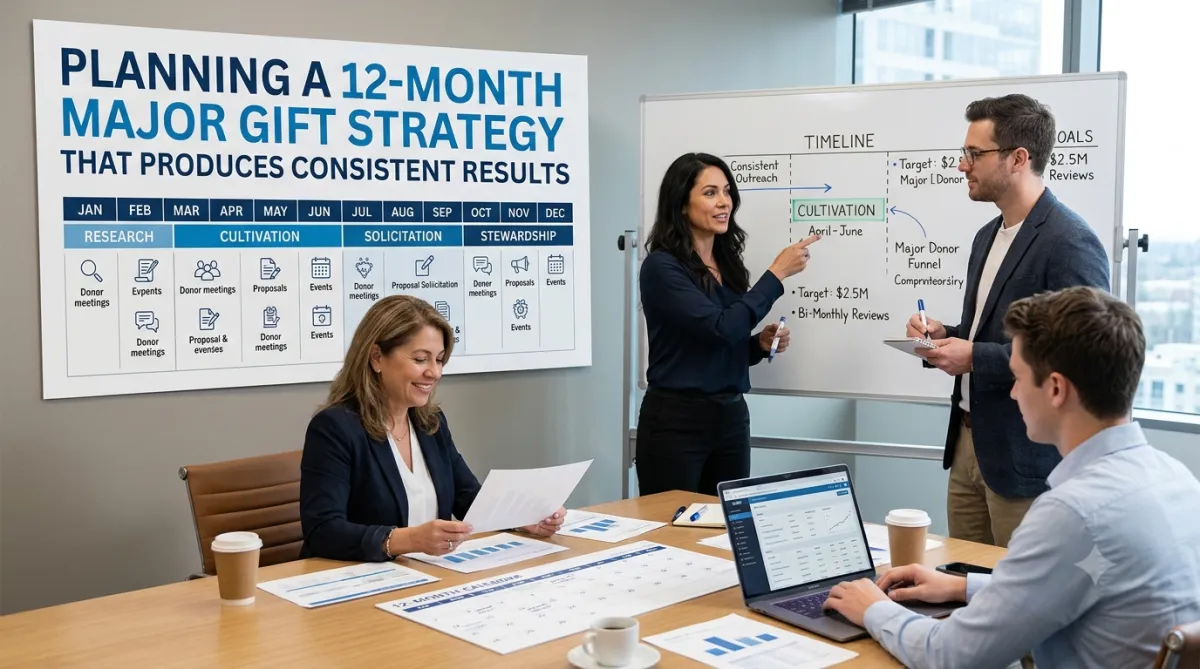
Planning a 12-Month Major Gift Strategy That Produces Consistent Results
Planning a 12-Month Major Gift Strategy That Produces Consistent Results
Building a successful major gift program is rarely about finding one generous donor at the perfect moment. Sustainable fundraising comes from thoughtful planning, meaningful relationships, and a strategy that guides every conversation throughout the year. I have learned that organizations often struggle with inconsistent results because they focus only on immediate fundraising goals instead of creating a structured annual roadmap. A carefully planned twelve month strategy helps eliminate guesswork, strengthens donor confidence, and creates opportunities for larger contributions over time. Through Hey Fundraiser, I encourage nonprofit leaders to view major gifts as an ongoing relationship rather than a series of isolated asks. When every month has a clear purpose, fundraising becomes more predictable, organized, and rewarding.
Why Major Gift Strategies Need a Full Year of Planning
Many organizations enter a fundraising season hoping generous supporters will naturally increase their giving, but meaningful gifts usually develop after months of trust building. A twelve month strategy creates intentional touchpoints that allow donors to understand the mission, witness measurable progress, and become emotionally invested in future initiatives. Instead of rushing toward fundraising deadlines, I can plan conversations that educate, inspire, and strengthen long term commitment. This structured approach also helps avoid periods of inactivity that often weaken donor relationships. Every interaction contributes to a larger journey that steadily moves supporters toward transformational giving opportunities.
Starting With Clear Annual Objectives
Before planning activities for the year, I define exactly what success should look like. Revenue goals, the number of major gifts, donor retention targets, and prospect development all deserve clear benchmarks. These objectives should be realistic while still encouraging meaningful growth based on previous fundraising performance. Once measurable goals are established, every meeting, campaign, and communication can be evaluated according to whether it supports those outcomes. Clear objectives also help teams remain focused during busy fundraising periods when unexpected opportunities or distractions appear. A well defined destination makes it much easier to build an effective roadmap.
Understanding My Ideal Major Donor
Every successful strategy begins with understanding the people behind the donations. Rather than viewing supporters simply as financial contributors, I spend time learning about their interests, motivations, philanthropic history, and long term aspirations. Some donors value measurable community impact, while others are inspired by innovation, education, healthcare, or personal experiences connected to the cause. This knowledge allows me to create conversations that feel personal instead of transactional. When donors recognize that their values are understood and respected, trust develops naturally and meaningful partnerships become easier to establish over time.
Building a Qualified Prospect Pipeline
Consistent fundraising depends on maintaining a healthy pipeline of qualified prospects throughout the year. Existing supporters, board referrals, volunteers, community leaders, and corporate contacts often represent excellent opportunities for future major gifts. I regularly evaluate each prospect based on their connection to the mission, giving capacity, level of engagement, and willingness to deepen their involvement. Maintaining an active pipeline prevents fundraising from becoming dependent on only a handful of loyal donors. As relationships evolve, new prospects continuously move into higher levels of engagement, creating a stronger foundation for future campaigns.
Creating Quarterly Relationship Milestones
Breaking a twelve month strategy into quarterly milestones makes the overall process easier to manage and evaluate. During the first quarter, I focus primarily on research, introductions, and relationship building without immediately requesting financial support. The second quarter often emphasizes personalized engagement through meetings, updates, and mission centered experiences. By the third quarter, many relationships are ready for meaningful discussions about future investments. The final quarter becomes the ideal time to present carefully prepared gift opportunities supported by months of consistent communication and demonstrated organizational progress.
Establishing Meaningful Monthly Engagement
Every month should include purposeful interactions that strengthen donor relationships without creating unnecessary pressure. These engagements may include progress updates, handwritten notes, impact stories, behind the scenes conversations, or invitations to special events. Regular communication demonstrates reliability while reminding donors that they are valued partners in the organization's success. I also pay close attention to donor preferences regarding communication frequency and style. Personalized engagement creates familiarity and reinforces confidence long before any formal fundraising conversation begins.
Aligning Campaigns With Donor Interests
Not every fundraising campaign appeals equally to every major donor. One supporter may be passionate about scholarships, while another may care more deeply about infrastructure, research, or community outreach. Matching opportunities with individual interests increases both donor satisfaction and campaign effectiveness. I spend time connecting each funding opportunity with the values that matter most to specific supporters. This thoughtful alignment transforms fundraising conversations from generic requests into meaningful investment opportunities where donors clearly understand the impact their generosity will create.
Preparing for Major Gift Conversations
Successful solicitations rarely happen spontaneously. Preparation includes reviewing previous conversations, understanding donor interests, anticipating questions, and presenting compelling evidence of organizational impact. I also ensure that financial needs are clearly explained with transparent budgets and measurable outcomes. Confidence during these discussions comes from preparation rather than improvisation. Donors appreciate conversations that respect their time while providing the information needed to make informed philanthropic decisions. Careful preparation demonstrates professionalism and reinforces organizational credibility.
Tracking Progress Throughout the Year
A strategic plan becomes much more valuable when supported by consistent measurement and evaluation. I regularly review donor engagement, meeting outcomes, proposal status, gift commitments, and relationship development throughout the year. These ongoing reviews reveal which activities produce meaningful progress and where adjustments may be necessary. Monitoring performance also helps identify potential risks before they affect annual fundraising goals. Small improvements made consistently often generate substantial long term results across an entire fundraising program.
Managing Donor Stewardship After the Gift
Receiving a major gift represents the beginning of a deeper relationship rather than the conclusion of a fundraising effort. Stewardship includes expressing sincere appreciation, reporting measurable impact, sharing organizational milestones, and continuing meaningful communication throughout the year. Donors want reassurance that their generosity creates tangible results within the communities they support. I focus on demonstrating accountability while celebrating the difference each contribution makes. Strong stewardship significantly increases the likelihood of future gifts while strengthening long term loyalty and advocacy.
Encouraging Internal Team Alignment
Major gift fundraising becomes far more effective when leadership, board members, staff, and volunteers understand their respective roles. Everyone involved should recognize how relationship building contributes to overall fundraising success. Open communication ensures that donor interactions remain coordinated, professional, and consistent across the organization. Shared knowledge also reduces duplication of effort while improving the donor experience. Through the insights shared on Hey Fundraiser, I frequently emphasize that successful fundraising depends on collaboration rather than isolated individual efforts.
Remaining Flexible Without Losing Direction
Even the strongest annual plans require occasional adjustments. Economic conditions, organizational priorities, donor circumstances, and unexpected opportunities may influence fundraising activities throughout the year. Flexibility allows me to respond effectively while maintaining focus on long term objectives. Rather than abandoning the strategy entirely, I adapt timelines, communication methods, or campaign priorities when circumstances change. This balance between structure and adaptability keeps fundraising efforts resilient regardless of external challenges.
Using Reflection to Strengthen Future Planning
As the twelve month strategy concludes, I dedicate time to evaluating every aspect of the fundraising journey. Reviewing donor feedback, campaign performance, relationship development, and financial outcomes provides valuable insights for future planning. Successes should be documented and repeated, while challenges offer opportunities for improvement rather than discouragement. Continuous learning strengthens both personal fundraising skills and organizational performance over time. Every completed fundraising cycle becomes a foundation for even greater consistency in the years ahead.
A successful twelve month major gift strategy is built through intentional planning, consistent communication, thoughtful stewardship, and meaningful donor relationships. Rather than relying on isolated fundraising campaigns, I focus on creating a structured journey that allows supporters to become deeply connected with the mission over time. Consistency develops when every month contributes to a larger vision supported by measurable goals and genuine relationship building. Sustainable fundraising is achieved through patience, preparation, and continuous evaluation rather than short term tactics. At Hey Fundraiser, my goal is to help fundraising professionals build strategies that inspire donor confidence, strengthen long term partnerships, and produce dependable results year after year.
